
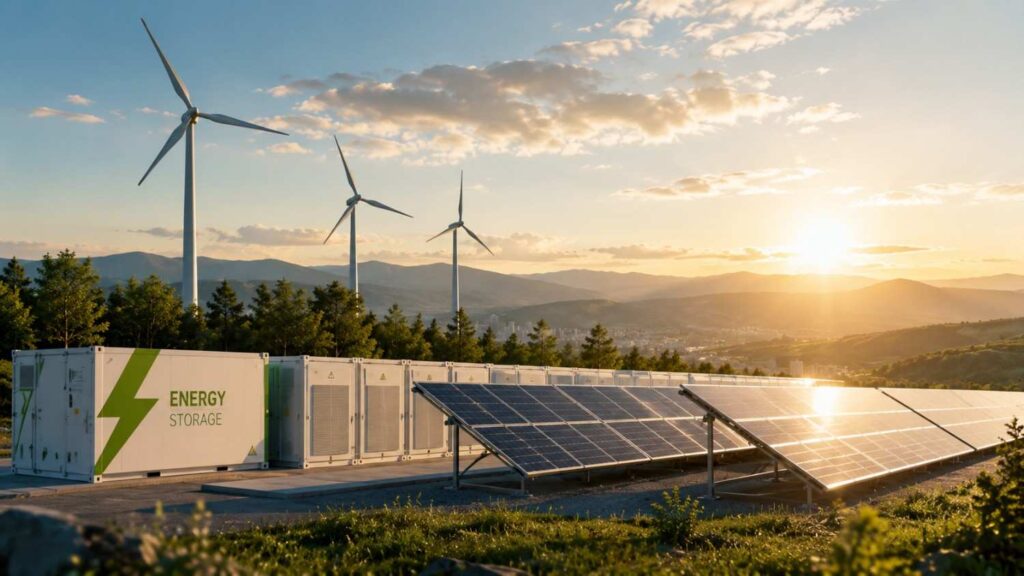
The Future of Renewable Energy Technologies
Renewable energy is moving from a supplementary power source to a central part of the global electricity system. IRENA reported that worldwide renewable capacity reached 5,149 gigawatts at the end of 2025 after 692 GW was added during the year. Renewables represented 85.6% of all global power-capacity additions, showing that most new generating infrastructure now comes from renewable sources.
This growth does not mean that the energy transition is complete. Electricity systems must still connect projects more quickly, balance variable generation, expand transmission, improve storage, and provide clean energy to industry, buildings, and transport. The next stage will therefore be defined by system integration as much as by new generating equipment.
The IEA expects almost 4,600 GW of renewable capacity to be added between 2025 and 2030. Solar photovoltaic systems are forecast to account for nearly 80% of that expansion. Renewables are projected to supply 43% of global electricity by 2030 and meet more than 90% of electricity-demand growth during the period.
Understanding the future of renewable energy technologies requires looking beyond solar panels and wind turbines. Advanced materials may increase solar efficiency. Floating platforms may expand offshore wind into deeper waters. Enhanced geothermal systems may provide renewable electricity regardless of weather. Long-duration storage, digital grids, and flexible demand will help balance growing quantities of variable power.
Renewable hydrogen and synthetic fuels may also support selected industrial and transport applications that cannot be electrified easily. However, these technologies will succeed only if their costs, infrastructure, and real customer demand become commercially sustainable.
In my experience, the most realistic outlook is not based on one breakthrough replacing every other technology. The future will combine established renewable systems with carefully selected innovations, stronger infrastructure, efficient energy use, and policies that reward reliability as well as generation.
Solar, Wind, and Geothermal Technologies Are Advancing
Solar, wind, and geothermal energy will form a large part of future renewable electricity supply, but each technology will evolve differently. Solar research is focused on increasing efficiency, extending module life, improving recyclability, and creating products that can be installed on more surfaces. Wind developers are pursuing larger turbines, taller towers, advanced controls, and platforms for deeper offshore waters. Geothermal innovators are applying improved drilling, sensing, and reservoir-engineering methods to reach heat in regions without conventional hydrothermal resources.
These innovations have different levels of commercial maturity. Silicon solar modules and conventional wind turbines are established products that will improve gradually. Perovskite-silicon tandem cells and floating offshore wind are moving through demonstration and early commercialization. Enhanced geothermal systems remain an emerging option whose future depends on drilling performance, reservoir management, and project economics.
A professional assessment should distinguish technical potential from expected deployment. High laboratory efficiency does not guarantee that a technology will survive outdoors for decades. A successful offshore prototype does not guarantee an affordable supply chain. A promising geothermal resource does not remove geological uncertainty.
The technologies should also be evaluated as parts of regional energy systems. Solar may dominate in areas with strong sunlight and available land or rooftops. Wind may offer higher output in coastal, plains, or mountain regions. Geothermal may become valuable where subsurface heat can provide firm electricity or industrial heat.
The comparison below summarizes their future roles and primary barriers.
| Technology | Primary Future Role | Main Opportunity | Key Challenge |
|---|---|---|---|
| Advanced solar PV | Distributed and utility-scale power | Higher efficiency and flexible installation | Durability and manufacturing scale |
| Onshore and offshore wind | Large-scale electricity generation | Larger resource areas and higher output | Permitting, supply chains, and grid access |
| Enhanced geothermal | Firm renewable electricity and heat | Expansion beyond traditional geothermal regions | Drilling cost and geological risk |
| Long-duration storage | Multi-hour and multi-day grid balancing | Greater renewable integration | Commercial scale and project finance |
| Renewable hydrogen | Industrial feedstock and clean fuel | Decarbonizing difficult sectors | Cost, demand, and infrastructure |
Tandem and Perovskite Solar Cells
Conventional crystalline-silicon modules will continue to dominate solar deployment in the near term because manufacturers, installers, financiers, and regulators understand their performance. Future innovation will build on that foundation rather than replace it immediately.
Tandem cells place two light-absorbing materials together so each captures a different portion of the solar spectrum. A perovskite layer can be placed over silicon, allowing the combined cell to convert sunlight more efficiently than either material could theoretically achieve alone. DOE identifies tandem-cell use as one of the main advantages of metal-halide perovskites.
Perovskites may also support manufacturing processes with fewer or lower-temperature steps. That possibility could reduce production costs and enable lightweight or flexible applications. However, commercial success requires more than strong laboratory results.
DOE identifies stability, durability, efficiency at larger scale, manufacturability, validation, and bankability as major challenges. Perovskite materials can degrade through moisture, oxygen, heat, light, and applied voltage, and they are not yet produced commercially at mainstream scale because operational lifetime remains limited.
The likely path is gradual. Tandem products may first appear in high-value markets where efficiency per unit of area matters, followed by wider use if manufacturers can demonstrate long service life, consistent production, safe materials management, and credible warranties.
| Technology | Commercial Readiness | Primary Application | Expected Growth Through 2030 | Major Limitation |
|---|---|---|---|---|
| Advanced Solar PV | Very High | Residential, commercial, utility-scale electricity | Very High | Panel durability and manufacturing improvements |
| Floating Offshore Wind | Medium | Large-scale offshore power generation | High | High installation and infrastructure costs |
| Enhanced Geothermal Systems | Medium | Continuous electricity and industrial heat | Moderate | Drilling complexity and geological uncertainty |
| Long-Duration Energy Storage | Medium | Multi-hour and multi-day grid balancing | High | Commercial deployment and project financing |
| Renewable Hydrogen | Medium | Heavy industry, shipping, fertilizer, aviation | High | Production cost and limited infrastructure |
Larger Turbines and Floating Offshore Wind
Wind technology is advancing through taller towers, longer blades, improved materials, more accurate forecasting, and digital control systems that optimize output while reducing mechanical stress. Larger turbines can capture more energy, although they also require specialized transportation, installation equipment, maintenance strategies, and supply chains.
Offshore wind can access stronger and more consistent resources than many land-based locations. Most existing projects use fixed foundations in relatively shallow water. Floating platforms could extend development into deeper areas where fixed-bottom structures are technically or economically impractical.
A floating project requires more than a turbine. Developers need stable platform designs, anchoring and mooring systems, dynamic subsea cables, suitable ports, installation vessels, remote monitoring, and reliable maintenance procedures. These components must be standardized and manufactured at scale before costs can fall significantly.
The IEA expects approximately 140 GW of offshore wind capacity to be added between 2025 and 2030, more than twice the amount added during the previous five years. However, it reduced its earlier forecast because higher costs, policy changes, supply-chain problems, undersubscribed auctions, and project cancellations have affected bankability.
Floating offshore wind may unlock valuable resources, but it will not avoid the wider industry’s challenges. Its success will depend on port investment, manufacturing capacity, transmission planning, environmental review, community engagement, and contracts that reflect realistic project costs.
Enhanced Geothermal and Emerging Firm Power
Conventional geothermal power requires heat, underground fluid, and sufficient permeability for that fluid to move through hot rock. These conditions exist naturally only in certain regions. Enhanced geothermal systems aim to expand the resource by engineering reservoirs where heat exists but fluid flow is insufficient.
DOE explains that EGS development can involve drilling into hot rock, injecting fluid under controlled conditions to create or reopen fractures, and circulating fluid through the reservoir. The heated fluid returns to the surface through a production well and is used to generate electricity.
The technology is attractive because it could provide firm and flexible renewable power regardless of sunlight or wind conditions. Geothermal plants may also supply direct heat for buildings, industrial processes, or district-energy systems.
Challenges remain substantial. Deep drilling is expensive, subsurface conditions are uncertain, and reservoir performance must be maintained for many years. Developers must manage water, induced seismicity, well integrity, high temperatures, and the risk that a reservoir will not deliver the expected flow.
DOE is supporting pilot demonstrations in varied geological conditions, indicating that EGS is still moving toward wider commercial viability.
Future progress may benefit from improved drilling, downhole sensors, seismic monitoring, advanced modeling, and expertise developed in oil and gas. Closed-loop and superhot geothermal designs may also expand the range of usable resources.
Related Articles
Storage and Smarter Grids Will Make Renewables Reliable
Solar and wind generate electricity according to weather and time of day, while customer demand follows its own patterns. As the share of variable renewable energy increases, electricity systems need more ways to balance supply and demand without wasting clean power or creating reliability problems.
Energy storage is one part of the solution. Batteries can respond quickly, shift electricity across hours, and provide services that help stabilize the grid. Longer-duration technologies may support extended periods of low renewable output. Pumped-storage hydropower, thermal systems, flow batteries, compressed air, and other technologies can serve different time scales.
Grid expansion is equally important. Renewable projects are often located far from population centers or industrial loads. New transmission can move electricity across regions, allowing areas with different weather patterns and demand profiles to support one another.
Digital controls can make both new and existing infrastructure more productive. Better forecasting helps operators anticipate solar, wind, and demand changes. Dynamic line ratings may allow transmission lines to carry more electricity when weather conditions permit. Advanced inverters can help control voltage, frequency, and system stability.
Demand flexibility adds another resource. Electric vehicles, heat pumps, building systems, water heaters, industrial equipment, and data centers can sometimes shift consumption without reducing the service they provide.
The future grid will therefore be more interactive. Instead of balancing electricity only by changing the output of large power plants, operators will coordinate generation, storage, networks, and millions of flexible devices. This transition requires updated standards, electricity-market rules, cybersecurity, consumer protections, and incentives that reward useful flexibility.
Short-Duration Batteries and Long-Duration Storage
Lithium-ion batteries are well suited to rapid response and shifting electricity across several hours. They can store midday solar output for evening demand, reduce peak loads, provide backup power, and deliver frequency-control services. Continued manufacturing scale and electric-vehicle demand have made lithium-ion the dominant electrochemical storage technology.
However, systems with high renewable shares may need storage that can discharge for longer periods. Several cloudy or low-wind days can create challenges that a battery designed for a two- or four-hour cycle cannot solve economically.
DOE defines long-duration energy storage as systems capable of delivering electricity for at least 10 hours. The category can include flow batteries, thermal storage, compressed-air systems, pumped-storage hydropower, gravity-based systems, and other mechanical, chemical, or electrochemical technologies.
No single storage technology will replace every other option. Lithium-ion may remain best for fast response and daily cycling. Pumped hydropower may provide large-scale storage where geography permits. Thermal systems may be efficient when heat is the final energy requirement. Flow batteries may offer advantages for long cycling life and independently scalable energy capacity.
Project selection should consider duration, response speed, efficiency, location, safety, materials, expected cycle frequency, and connection requirements.
The goal is a diversified storage portfolio. Using the right technology for each grid service can reduce costs and improve reliability more effectively than relying on one battery chemistry for every application.
| Energy System Component | Primary Function | Key Benefit | Future Importance |
|---|---|---|---|
| Battery Energy Storage | Stores excess renewable electricity | Improves grid stability and peak demand management | Very High |
| Smart Electricity Grids | Monitor and balance electricity flow | Better integration of renewable resources | Very High |
| Modern Transmission Networks | Deliver electricity over long distances | Reduces congestion and increases reliability | Very High |
| Demand Response Systems | Shift electricity consumption to off-peak periods | Improves energy efficiency and grid flexibility | High |
| Microgrids | Supply localized renewable power | Enhances resilience during outages | High |
Digital Grids, Transmission, and Demand Flexibility
Renewable projects cannot contribute fully if they wait years for a connection or if electricity cannot move from the project to customers. Grid infrastructure has become one of the largest constraints on renewable deployment.
The IEA reported that more than 2,500 GW of renewable, storage, and large-demand projects were stalled in grid-connection queues worldwide. It estimated that annual grid investment must increase by roughly 50% by 2030 from the current level of about USD 400 billion to meet forecast electricity demand.
Building transmission remains essential, but digital technologies can improve existing networks. Dynamic line ratings use real-time weather and equipment conditions to estimate safe capacity. Advanced power-flow controls can direct electricity away from congested routes. Automated substations and better forecasting can help operators respond more quickly.
Grid-forming inverters are another important development. Traditional grid-following inverters depend on an existing voltage and frequency reference. Grid-forming controls can help establish and regulate those conditions in systems with high shares of solar, wind, and battery resources. NREL identifies these capabilities as increasingly important for future inverter-dominated power systems.
Demand flexibility complements infrastructure. Smart charging can move electric-vehicle demand away from congested periods. Buildings can preheat, precool, or adjust water heating when renewable supply is abundant. Industrial loads can sometimes respond to prices or grid conditions.
Together, transmission, digital controls, inverters, and flexible demand can reduce curtailment and make renewable electricity more dependable.
As many industry analyses of future energy systems note, digital infrastructure, intelligent grid management, and flexible demand will be just as important as expanding renewable generation capacity.
Distributed Energy and Microgrids
Distributed energy resources generate, store, or manage electricity close to the customer. They include rooftop solar, community solar, household and commercial batteries, electric vehicles, smart thermostats, building controls, and small-scale generators.
These resources are becoming a major part of renewable growth. The IEA expects residential, commercial, industrial, and off-grid distributed systems to account for 42% of total global solar PV expansion between 2025 and 2030.
Distributed systems can reduce customer bills, improve energy access, and lower demand on parts of the grid. When combined with storage and intelligent controls, they can also provide flexibility to utilities. A collection of distributed devices may be coordinated as a virtual power plant, responding to electricity prices or network requirements.
Microgrids take local coordination further by managing generation, storage, and demand within a defined area. Some microgrids can disconnect temporarily from the wider network and continue serving critical loads during an outage. This can improve resilience for hospitals, campuses, military facilities, industrial sites, remote communities, and emergency shelters.
Microgrids do not eliminate the value of large interconnected networks. Regional grids allow electricity to move across wider areas and support customers when local resources are insufficient.
The main challenge is coordination. Utilities, regulators, technology providers, and customers need standards for communication, cybersecurity, compensation, interconnection, and consumer protection. Distributed energy becomes most valuable when it is treated as part of the electricity system rather than invisible equipment behind the meter.
Renewable Hydrogen and Clean Fuels Will Target Hard-to-Electrify Sectors
Electricity is usually the most efficient way to use renewable energy. A wind turbine or solar array can supply a motor, heat pump, vehicle battery, or industrial process directly through the grid. Converting that electricity into hydrogen and then converting the hydrogen into another form introduces energy losses and additional infrastructure.
However, direct electrification is not practical for every activity. Some industries need hydrogen as a chemical feedstock. Certain high-temperature processes may require fuels. Long-distance shipping and aviation may need energy-dense molecules rather than large batteries. Seasonal energy storage may also require options beyond conventional electrochemical systems.
Renewable hydrogen is produced through electrolysis powered by renewable electricity. The hydrogen may be consumed directly or converted into ammonia, methanol, synthetic hydrocarbons, or other products. These derivatives can support fertilizer, steel, shipping, aviation, and industrial chemical production.
The technology has attracted significant interest, but announced projects should not be confused with operating facilities. Projects need affordable electricity, electrolyzers, water, storage, transport, permits, financing, and customers prepared to sign long-term purchase agreements.
The IEA’s 2026 review shows that deployment is growing but remains small compared with conventional hydrogen production. Installed electrolysis capacity exceeded 4 GW in 2025, yet low-emissions hydrogen represented less than 1% of total global output that year.
The most credible near-term applications are therefore likely to be concentrated in industrial clusters where production and demand are close together. Renewable hydrogen should be viewed as a targeted decarbonization tool, not a universal replacement for direct electricity.
Where Renewable Hydrogen Is Most Useful
Renewable hydrogen is most valuable where hydrogen is already used or where direct electrification faces major technical limits. Existing hydrogen demand in refining, ammonia, and chemical production offers an immediate opportunity to replace fossil-based supply with lower-emissions alternatives.
Fertilizer production is one important application because ammonia depends on hydrogen. Selected steelmaking processes may also use hydrogen to reduce iron ore instead of relying on coal-based methods. Renewable hydrogen or hydrogen-derived fuels may support maritime transport, aviation fuel production, and high-temperature industrial processes.
Hydrogen can also store energy, although converting electricity into hydrogen and later back into electricity involves substantial efficiency losses. This may still be useful for long-duration or seasonal storage when other options are unavailable or unsuitable.
The IEA reported that low-emissions hydrogen production reached almost one million tonnes in 2025, while installed electrolysis capacity doubled to more than 4 GW. This remains a very small portion of the global hydrogen market, indicating that the sector is still in an early scaling phase.
Projects should be prioritized according to climate value and availability of alternatives. Using renewable electricity directly in vehicles, buildings, or motors will often make more sense than converting it into hydrogen. Hydrogen should focus on applications where its chemical properties, storage potential, or fuel density provide a clear advantage.
Why Cost and Infrastructure Remain Barriers
Renewable hydrogen remains expensive because production depends on several costly components. Developers need low-priced renewable electricity, electrolyzers, high utilization, water treatment, compression, storage, transport, and specialized end-use equipment.
Electrolyzers operate most economically when used frequently, but solar and wind output varies. A project may need grid electricity, storage, oversized renewable capacity, or a combination of resources to improve utilization. Each option affects the cost and emissions profile.
Demand uncertainty is another barrier. Large industrial projects require long-term customers, but buyers may hesitate to sign contracts when renewable hydrogen costs more than conventional hydrogen or alternative fuels. Producers may then struggle to secure financing without guaranteed demand.
Infrastructure must also be developed. Hydrogen may require new or repurposed pipelines, storage caverns, port facilities, ammonia terminals, certification systems, and safety procedures. The IEA reported that announced hydrogen pipeline projects exceed 40,000 kilometers by 2035, but only a small share is operating or supported by committed investment.
The IEA also found that fossil-based hydrogen is expected to remain less costly than renewable hydrogen in most regions in the near term. Policy support, carbon pricing, purchase mandates, or contracts may therefore be needed to close the gap.
Early deployment is likely to concentrate around industrial hubs where several users can share production, storage, and transport infrastructure.
Quick Answer About The Future of Renewable Energy Technologies
The future energy system will rely on a coordinated portfolio of advanced solar panels, larger wind turbines, enhanced geothermal power, short- and long-duration energy storage, smart grids, flexible electricity demand, and renewable hydrogen. Solar and wind are expected to provide most new generation because they are modular, widely available, and increasingly cost-competitive. The IEA forecasts almost 4,600 GW of renewable additions between 2025 and 2030, with solar representing nearly 80% of the increase.
Generation alone will not create a reliable system. Batteries can shift solar electricity into evening hours, while pumped hydropower, thermal storage, flow batteries, compressed air, and other long-duration technologies may balance supply over longer periods. Transmission lines and digitally managed distribution networks will move electricity between regions and coordinate millions of distributed devices.
Firm renewable sources will also matter. Enhanced geothermal systems could expand geothermal power beyond traditional resource areas. Hydropower and sustainable bioenergy may provide flexibility where local conditions support them.
Renewable hydrogen is likely to serve specialized industrial and transport applications rather than ordinary household energy needs. Direct electrification is generally more efficient, but hydrogen may help decarbonize fertilizer production, selected steelmaking processes, shipping fuels, and other difficult activities.
Success will depend on cost, permitting, manufacturing, grid connections, investment, workforce skills, public acceptance, and stable policy. The technologies with the greatest potential will still require practical systems that can finance, install, and operate them at scale.
The importance of accelerating the global renewable transition is also reflected in international climate initiatives, which emphasize expanding clean energy deployment alongside stronger electricity infrastructure.
Which Technologies Will Matter Most?
Solar PV is likely to remain the largest source of new renewable capacity because it can be deployed at many scales. Rooftop panels can serve individual buildings, commercial installations can reduce business electricity costs, and utility-scale projects can add large amounts of power relatively quickly. The IEA expects distributed systems to represent 42% of global solar expansion from 2025 to 2030, demonstrating that future growth will occur both behind the meter and through large power plants.
Wind will remain an important complement because its output often follows different daily and seasonal patterns from solar. Larger onshore turbines and expanded offshore development can access stronger resources, although costs, permitting, and supply chains remain major constraints.
Storage and grid technologies may be just as important as generation. Batteries, pumped hydropower, long-duration storage, transmission, demand response, and grid-forming inverters determine whether renewable electricity can meet demand reliably.
Enhanced geothermal systems could provide firm power in more locations, while renewable hydrogen may support industries that cannot use electricity directly. The future will therefore depend on technology combinations selected according to geography, energy demand, infrastructure, and local economic conditions.
What Will Determine Their Success?
Technical performance is only one factor in renewable-energy success. A technology may demonstrate impressive laboratory efficiency but still struggle commercially if it is difficult to manufacture, finance, permit, connect, insure, or maintain. Deployment requires a complete value chain from raw materials and factories to trained workers, project developers, grid operators, and long-term customers.
Cost competitiveness will remain important. IRENA found that 91% of new utility-scale renewable projects commissioned in 2024 generated electricity more cheaply than the lowest-cost new fossil-fuel alternative. Onshore wind and solar PV remained among the least expensive sources of newly built power.
However, low generation costs do not automatically create reliable electricity. Projects may face years of grid-connection delays, limited transmission capacity, curtailment, higher financing costs, or public opposition.
Stable policy also matters. Developers need predictable rules for permitting, land access, auctions, interconnection, environmental review, and market participation. Sudden policy changes can make otherwise viable projects difficult to finance.
The strongest markets will coordinate generation, grids, storage, flexible demand, workforce development, manufacturing, and community benefits. A technology becomes transformative when it performs reliably and when institutions can deploy it repeatedly at an acceptable cost.
Frequently Asked Questions About The Future of Renewable Energy Technologies
Questions about future renewable technologies often focus on which source will grow fastest, whether fossil fuels will disappear, and which emerging innovations are closest to commercial use. The answers require a system-wide perspective because electricity generation is only one part of the transition.
Solar PV is likely to lead capacity growth, but a reliable electricity system cannot depend on solar alone. Wind, hydropower, geothermal power, storage, transmission, flexible demand, and digital controls will all contribute. The appropriate mix will vary according to climate, geography, existing infrastructure, industrial demand, and public policy.
It is also important to distinguish installed capacity from electricity generation. Solar and wind projects may have high capacity but produce different amounts of energy according to resource conditions. Firm and flexible resources can provide particular value even when their total capacity is smaller.
Emerging technologies are at different stages. Tandem solar cells and floating offshore wind may build on established industries. Enhanced geothermal and long-duration storage are advancing through demonstration projects. Renewable hydrogen has clear industrial applications but faces cost and infrastructure barriers.
The future is not fixed. Forecasts depend on policies, financing, supply chains, permitting, grid investment, and demand growth. Figures should therefore be treated as informed outlooks rather than guaranteed outcomes.
The following answers are written in natural language for beginners, voice search, featured snippets, and generative search systems. Each one gives a direct response while preserving the technical and economic context needed for informed decision-making.
Which Renewable Energy Technology Has the Best Future?
Solar PV is expected to experience the largest capacity growth through 2030. It is modular, can be installed rapidly, and works in residential, commercial, industrial, off-grid, and utility-scale settings. The IEA expects solar to represent nearly 80% of renewable-capacity expansion between 2025 and 2030.
However, the technology with the largest growth is not automatically the only one with an important future. Wind can complement solar through different production patterns. Hydropower and geothermal can provide firm or flexible output. Batteries and other storage systems can move electricity across time, while transmission connects regions with different resources.
The most valuable technology also varies by location. A sunny region with available land may prioritize solar and storage. A coastal area may have strong offshore wind potential. A region with accessible underground heat may benefit from geothermal power.
The best future belongs to integrated systems rather than one source. Solar will probably lead new capacity, but the most reliable and affordable energy systems will combine several technologies with grids, storage, efficiency, and flexible demand.
Will Renewable Energy Completely Replace Fossil Fuels?
Renewable electricity will continue to replace fossil-fuel generation, but complete replacement will take different amounts of time across countries and sectors. Electricity is progressing faster than heavy industry, aviation, shipping, and some heating applications.
The IEA projects that renewables will supply 43% of global electricity by 2030 and meet more than 90% of electricity-demand growth from 2025 to 2030. This represents major expansion, but it does not mean fossil fuels disappear from every power system within that period.
Replacement depends on storage, grid capacity, flexible demand, firm low-emissions resources, and the retirement schedule of existing plants. Some regions may retain fossil generation for reliability while reducing how often it operates. Others may use hydropower, geothermal, nuclear energy, or long-duration storage to reduce dependence more quickly.
Outside electricity, direct electrification can replace fossil fuels in vehicles, buildings, and some industrial processes. Renewable hydrogen, sustainable fuels, efficiency, and material changes may be required for harder sectors.
The transition is therefore a gradual restructuring of energy systems rather than one simultaneous global switch.
What Is the Next Major Innovation in Solar Energy?
Tandem solar cells are one of the most promising next-generation developments. They combine two light-absorbing materials so that each captures a different section of the solar spectrum. Perovskite-silicon tandems may achieve higher efficiency than conventional silicon cells using the same surface area.
DOE identifies perovskites as potentially useful because their optical properties can be adjusted and because they may support manufacturing processes with fewer or less energy-intensive steps.
The main challenge is durability. Commercial solar modules must operate outdoors for decades while exposed to heat, moisture, oxygen, sunlight, electrical stress, and temperature changes. Current perovskite materials can degrade under these conditions, and consistent performance must also be demonstrated across large modules rather than small laboratory cells.
Other important solar innovations include bifacial modules, improved silicon cells, recyclable designs, building-integrated photovoltaics, lightweight modules, advanced tracking, and smarter inverters.
The next major commercial change may therefore be a combination of higher-efficiency cells, improved manufacturing, better system design, and lower lifecycle impacts rather than one completely new type of panel.
What Technologies Could Supplement Lithium-Ion Batteries?
Long-duration storage technologies can supplement lithium-ion batteries when electricity must be stored for 10 hours, several days, or potentially longer. DOE includes flow batteries, thermal systems, compressed-air storage, pumped hydropower, and other chemical, mechanical, and electrochemical approaches within the long-duration category.
Flow batteries store energy in liquid electrolytes and may offer long cycle life. Thermal storage can hold heat or cold for buildings, industry, or later electricity generation. Pumped-storage hydropower moves water between reservoirs and already provides large-scale storage in suitable locations. Compressed-air and gravity systems store energy mechanically.
Sodium-based batteries may reduce dependence on lithium for some stationary applications, while hydrogen or hydrogen-derived fuels may provide extended or seasonal storage despite lower round-trip efficiency.
These technologies will not necessarily replace lithium-ion. Lithium-ion remains highly effective for fast response, electric vehicles, and daily cycling.
Future grids will likely use a portfolio. The correct option depends on discharge duration, response time, efficiency, geography, materials, safety, cost, and how frequently the system will operate.
Why Are Smart Grids Important for Renewable Energy?
Solar and wind output changes throughout the day and with weather conditions. A smart grid uses sensors, communications, forecasting, software, automated controls, and advanced power electronics to manage these changes more effectively.
Better forecasting allows grid operators to schedule other resources before renewable output rises or falls. Automated equipment can respond quickly to voltage or frequency changes. Dynamic line ratings and power-flow controls can increase the useful capacity of existing transmission infrastructure.
Smart grids can also coordinate customer devices. Electric vehicles may charge during periods of high renewable production. Buildings can adjust heating, cooling, or water heating without reducing comfort. Batteries can discharge when the network is congested.
Grid-forming inverters may become increasingly important as conventional rotating generators are replaced by inverter-connected solar, wind, and battery systems. NREL’s research roadmap identifies new control capabilities as essential for maintaining voltage, frequency, synchronization, and stability in future inverter-dominated grids.
Smart grids do not remove the need for new transmission and distribution equipment. They help operators use infrastructure more efficiently while supporting greater renewable integration.
Is Enhanced Geothermal a Realistic Future Technology?
Enhanced geothermal systems are technically realistic and are already being tested through research and demonstration projects. They aim to create useful geothermal reservoirs in hot rock that lacks sufficient natural fluid flow or permeability.
DOE explains that developers drill into hot rock, create or reopen fractures under controlled conditions, circulate fluid through the reservoir, and bring heated fluid back to the surface for electricity generation.
The technology could provide firm renewable electricity in regions without traditional geothermal resources. It may also supply industrial or district heat, increasing the value of each project.
Commercial growth will depend on reducing drilling costs, improving reservoir prediction, maintaining fluid flow, protecting well integrity, and managing water and induced seismicity. Geological uncertainty makes early project development financially risky.
DOE is supporting pilot demonstrations in different locations and rock conditions to assess scalability and develop repeatable methods.
EGS is therefore promising but not yet a universally mature solution. Its future will depend on whether developers can translate technical progress into reliable, financeable projects with predictable long-term output.
Conclusion
The renewable-energy transition is entering a phase in which deployment, integration, and system design matter as much as invention. Solar and wind will continue to provide most new capacity, but their value will depend increasingly on storage, transmission, digital control, flexible demand, and complementary firm resources.
IRENA’s 2026 data show that renewable capacity reached 5,149 GW after record additions in 2025. The IEA expects another 4,600 GW to be added between 2025 and 2030. These figures demonstrate strong momentum, but they also create an urgent requirement for grids, supply chains, skilled workers, land, permitting, and finance.
Advanced technologies can extend the transition. Tandem solar cells may produce more electricity from limited space. Floating offshore wind may open deeper-water resources. Enhanced geothermal systems may provide firm renewable power in more locations. Long-duration storage can address extended supply gaps, while renewable hydrogen can serve selected industrial and transport applications.
None of these technologies is guaranteed to succeed at scale. Commercialization requires durability, predictable costs, standards, customer demand, manufacturing capability, and supportive infrastructure.
The future should also be evaluated through energy security, affordability, environmental impact, and social outcomes. A project that generates low-carbon power but ignores communities, ecosystems, mineral supply chains, or worker needs may create new forms of opposition and delay.
The strongest transition will combine innovation with disciplined implementation. Governments, businesses, utilities, and communities must coordinate around complete energy systems instead of treating each technology as an isolated solution.
What Should Governments and Businesses Prioritize?
The first priority should be system integration. Governments and utilities need faster grid connections, coordinated transmission planning, transparent permitting, flexible electricity markets, and investment frameworks that support storage and demand response.
Grid queues demonstrate the urgency. More than 2,500 GW of generation, storage, and large-demand projects are waiting for connections worldwide. Expanding infrastructure and improving connection procedures may unlock more clean power than funding isolated demonstration projects without a deployment pathway.
Governments should also support research that addresses clear commercial barriers. Perovskite programs should focus on durability and scalable manufacturing. Geothermal programs should reduce drilling and reservoir risk. Storage policy should reward the reliability and flexibility that different technologies provide.
Businesses should begin with their actual energy requirements. A facility needing continuous high-temperature heat may need a different solution from an office building, data center, or transport fleet.
Supply-chain resilience deserves equal attention. Critical minerals, transformers, cables, power electronics, manufacturing equipment, and skilled labor can all become bottlenecks.
Finally, projects should engage communities early and distribute benefits fairly. Local employment, revenue sharing, environmental protection, land-use planning, and transparent communication can determine whether technically sound projects receive lasting public support.
Final Perspective
The future of renewable energy technologies will depend on the ability to deploy existing solutions while improving the emerging technologies needed for harder problems. Many essential tools already exist, including solar PV, wind power, hydropower, batteries, transmission, and demand response.
The remaining challenge is to use these technologies at a scale and pace consistent with growing electricity demand, energy security, affordability, and climate goals. Innovation can help by increasing solar efficiency, opening deeper offshore wind resources, extending storage duration, and making geothermal power available in more regions.
Renewable hydrogen and clean fuels may support sectors that cannot use electricity directly, but they should be applied carefully where their higher conversion losses and infrastructure requirements are justified.
No forecast can guarantee which individual technology or company will succeed. Policy changes, financing costs, material availability, public acceptance, and unexpected technical results can alter deployment.
The most resilient future will therefore remain diverse. It will combine centralized and distributed resources, variable and firm generation, short- and long-duration storage, expanded grids, and more flexible consumption.
Progress should be measured not only by installed capacity but by reliable electricity delivered, fossil-fuel use avoided, affordability improved, and benefits shared with communities.